PLENARY SYMPOSIUM:
Monday, June 3rd at 3:00 EDT (UTC -4)
Biodiversity Beyond Boundaries
Understanding complex systems of biocultural diversity calls for knowledge that reflects interactions, not boundaries.
Join global leaders as they share their work to span boundaries to create connected knowledge for biodiversity research and action. From engaging local knowledge for global policy action to creating integrated data systems for open access and robust science, this panel discussion will explore possibilities and frontiers for participatory sciences to confront some of our biggest global challenges.
Biodiversity Beyond Boundaries
The diversity of species on this planet enriches cultures, communities, and the natural systems that support human health, livelihoods, well-being, and joy. The connections among and across systems of biocultural diversity are vast, but the knowledge about these systems is disconnected.
Participatory sciences may be unequaled in their potential to bring robust insights to complex questions, doing what no kind of science has done before. Different approaches can bring together:
- Multiple ways of knowing
- Data at unprecedented scale and granularity
- Observers and knowledge holders who can drive change locally and globally
The opportunity could not be more timely, as the global community must act now to prioritize the lands and waters we protect. To best leverage the power of participatory sciences, we need to think beyond boundaries that have previously limited our collective understandings.
The esteemed speakers convened for this panel are each working at the highest levels to advance these frontiers. Their work can help us understand how to bring together powerful data and insights beyond boundaries: geopolitical boundaries, boundaries around whose knowledge is valued, boundaries between data sets, and between data systems, and more. Together we will broaden our scope of what’s possible through (and for) participatory sciences to drive wise decisions for people and the planet.
This opening Plenary Symposium is part of the CAPS 2024 special strand on Biodiversity, open to all CAPS 2024 attendees.
The 2024 Conference for Advancing Participatory Sciences (CAPS 2024) features multiple perspectives on the topic of Biodiversity via a dedicated strand across symposia, ideas to action sessions, and poster discussions. Across the four days of this event, the strand engages and builds a connected conversation around participatory sciences for biodiversity research and conservation (strand schedule here).
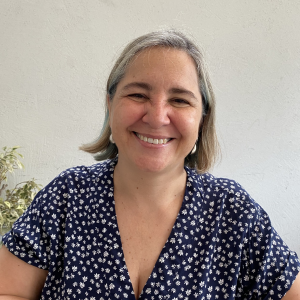
Joji Cariño is Senior Policy Adviser of Forest Peoples Programme (FPP). She is an Ibaloi from the Cordilleras Highlands of the Philippines. As well-known activist and analyst Joji Cariño has over thirty years of experience working on indigenous peoples’ rights, from actions to change unsustainable dam projects in the Philippines up to global environment forums such as the CBD, IPBES and Agenda 2030.
In the latest years she has been engaged in organizing networks of indigenous peoples and local communities and their own Community Based Monitoring and Information Systems (CBMIS). This work has led to important contributions of indigenous and local knowledge to global policy processes, such as in the CBD and IPBES. Joji has been Executive Secretary of the International Alliance of Indigenous and Tribal Peoples of the Tropical Forests and served as Commissioner on the World Commission on Dams, which conducted a global review of the development effectiveness of dams. She was heading the Indigenous Peoples and Biodiversity Programme of the Tebtebba Foundation, Philippines, and its ground breaking work on indicators for traditional knowledge.
Since 2013 Joji is Senior Policy Adviser at FPP. Joji has been a pioneer for the respect and recognition of the contribution of Indigenous and local knowledge in IPBES Work Programme and assessments. She served as a member of the Scientific Advisory Board of the Secretary General of the United Nations, and most recently has contributed to development of indicators to monitor traditional knowledge in the Kunming-Montreal Global Biodiversity Framework.
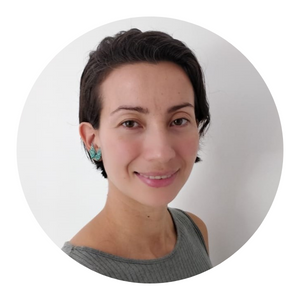
Mariana Varese is the Director of Amazon Landscapes at WCS and leads the Secretariat of the Amazon Waters Alliance, a network with over 25 partners from seven countries that promote open and collaborative science approaches to inform decision making and contribute the integrity and connectivity of the Amazon Basin’s aquatic ecosystems. A natural resources economist with over 15 years of conservation experience in the Amazon and Latin America and the Caribbean, Mariana holds an M.A. In Latin American Studies from the University of Florida.
Mariana has ample experience in community-based conservation, landscape and multi-scale conservation approaches, natural resource economics, and evidence-based participatory planning and adaptive management. Her current areas of interest citizen engagement in science, conservation and sustainable development; the effective use of evidence in decision making; and public goods.Mariana is also a member of the boards of the Iberoamerican Participatory Science Network (RICAP) and the Citizen Science Global Partnership (CSGP).
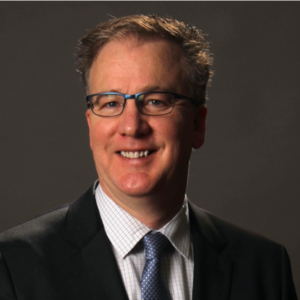
GBIF—the Global Biodiversity Information Facility—is an international network and research infrastructure funded by the world’s governments and aimed at providing anyone, anywhere, open access to data about all types of life on Earth. Miller started as Executive Secretary of the Secretariat in 2019. The Secretariat GBIF coordinates a global network of participating countries and organizations, provides data-holding institutions around the world with common standards and open-source tools that enable them to share information about where and when biodiversity has been recorded.
Before coming to GBIF, Miller was at the US National Science Foundation where he promoted international research collaborations and managed the funding programs in biodiversity science. From 2008-2013, Miller was a senior research scientist at the Australian National Herbarium, part of CSIRO, in Canberra. Miller has a Ph.D. in Plant Genetics from the University of Wisconsin. He continues to research and publish on topics in plant systematics, biogeography and biodiversity informatics, focusing mainly on the Australian flora.
Karen Soacha is a researcher specializing in citizen science, data governance, and knowledge management in research projects that develop citizen science infrastructures, such as GUARDEN and ECS (Horizon Europe), and previously in Cos4Cloud (Horizon 2020). She is part of the EMBIMOS research group at the Institute of Marine Sciences (ICM-CSIC), which coordinates the citizen observatory MINKA. Currently, she is pursuing a Doctorate in Information and Knowledge Society at the Open University of Catalonia, focusing her research on knowledge management in citizen observatories. Her interests lie in the intersection of knowledge management, citizen science, and governance. Karen has spent the last 15 years working with environmental and biodiversity information systems in Colombia and Spain, focusing on governance and networks of open data and citizen science data. She is also a member of the management group for the Iberoamerican Participatory Science Network (RICAP).