
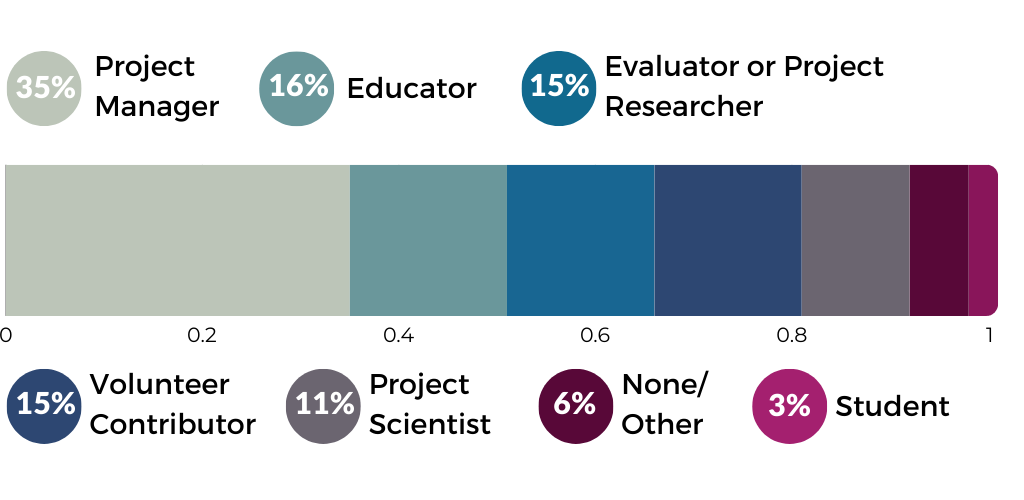
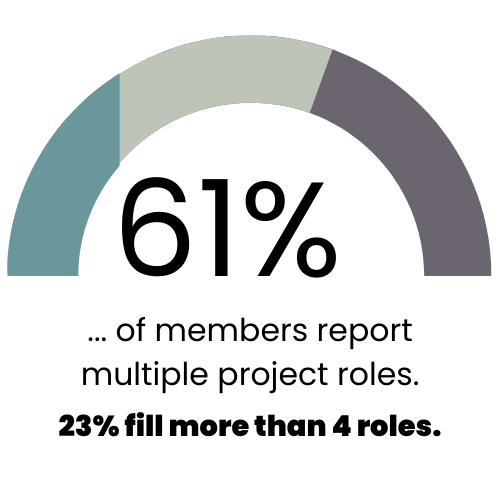


Our members unite from across all disciplines, and represent all skills and perspectives needed for projects to thrive. We focus on the practices that work for effective projects, and we know just how hard this work can be. AAPS is the only US-based organization that offers you the insights you need to complement your own expertise, for integrity in these complex collaborations.
Join any time – membership is good for one calendar year. You can join as an individual, or consider inviting your project or organization to join as an Affiliate for additional group benefits (Affiliate details available here).
Our tiered membership structure reflects that the value and benefit of membership does not look the same for everyone in this field. Please join at the highest rate within your capacity. If you are unsure which rate suits your circumstance, the quiz tool can help you decide. >>
You don’t have to do this work alone! AAPS is the place for cross-cutting conversations and collaborations that just can’t be found anywhere else.
AAPS Affiliates include universities, municipalities, tech companies, non-profits, and others large and small – groups that are proudly standing up in support of innovation and integrity in this field and the ways we can do more together.
Renaming this Association should not be confused with either a new name for the field or a mandate for others to make change, nor should it be seen as an abandonment of the term that built this movement. As some have recently written, “citizen science” in global communities is recognized an inclusive term for these practices. Others help us see that, for many, the term “citizen science” limits engagement and causes harm. These two things which may seem to contradict each other can both be true – the challenge is in how to operate in light of that complexity.
Subscribe to receive our latest updates in your inbox!
???? Data Ethics – Refers to trustworthy data practices for citizen science.
Get involved » Join the Data Ethics Topic Room on CSA Connect!
???? Publication Ethics – Refers to the best practice in the ethics of scholarly publishing.
Get involved » Join the Publication Ethics Topic Room on CSA Connect!
⚖️ Social Justice Ethics – Refers to fair and just relations between the individual and society as measured by the distribution of wealth, opportunities for personal activity, and social privileges. Social justice also encompasses inclusiveness and diversity.
Get involved » Join the Social Justice Topic Room on CSA Connect!
???? Human Subject Ethics – Refers to rules of conduct in any research involving humans including biomedical research, social studies. Note that this goes beyond human subject ethics regulations as much of what goes on isn’t covered.
Get involved » Join the Human Subject Ethics Topic Room on CSA Connect!
???? Biodiversity & Environmental Ethics – Refers to the improvement of the dynamics between humans and the myriad of species that combine to create the biosphere, which will ultimately benefit both humans and non-humans alike [UNESCO 2011 white paper on Ethics and Biodiversity]. This is a kind of ethics that is advancing rapidly in light of the current global crisis as many stakeholders know how critical biodiversity is to the human species (e.g., public health, women’s rights, social and environmental justice).
⚠ UNESCO also affirms that respect for biological diversity implies respect for societal and cultural diversity, as both elements are intimately interconnected and fundamental to global well-being and peace. (Source).
Get involved » Join the Biodiversity & Environmental Ethics Topic Room on CSA Connect!
???? Community Partnership Ethics – Refers to rules of engagement and respect of community members directly or directly involved or affected by any research study/project.
Get involved » Join the Community Partnership Ethics Topic Room on CSA Connect!
