Improve Your Project Communications by Thinking Like a Scientist

Improve Your Project Communications by Thinking Like a Scientist

Participatory science project leaders wear a lot of hats. And one of the most underappreciated, and frustrating to some, roles is that of a communicator. You’re expected to maintain a social media presence, send newsletters, and overall build an engaged community of participants — all on the side while you’re doing the job of actually running your project.  A lot of people who put effort into their communications approach them as a task-based chore: Post your post, send your email, check the boxes. But far fewer have a good sense of whether checking these boxes is actually accomplishing anything.  The…
Read More
New Tools Support Career Excellence in Informal Learning

New Tools Support Career Excellence in Informal Learning

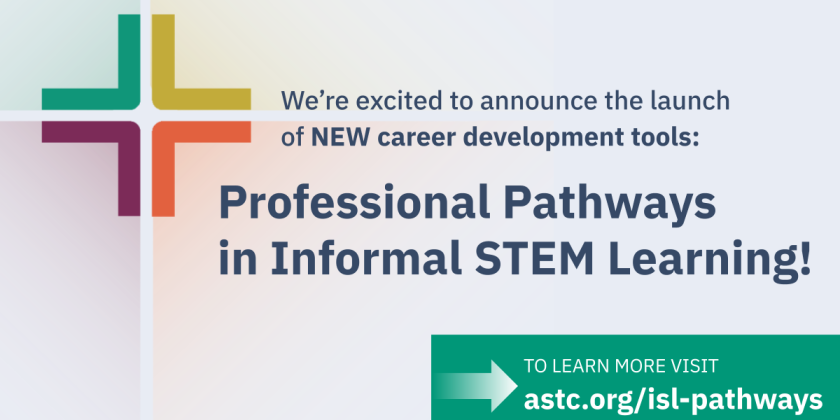
We think you’ll likely agree that what we do in our field is exciting and rewarding—informal learning via participatory sciences opens up so many diverse opportunities for people to explore our world. This means it also opens up just as many diverse opportunities to support that exploration through career paths, from volunteer coordinator to university researcher.  Yet this flexible and wide range of potential professions means it can sometimes be challenging to identify career goals and the right learning to help you meet those goals. Our friends at the Association of Science and Technology Centers (ASTC), alongside COSI’s Center for…
Read More
Resources Explained: Navigating US federal funding for participatory sciences with the NASA Cit Sci Leaders Series

Resources Explained: Navigating US federal funding for participatory sciences with the NASA Cit Sci Leaders Series

Note: 2025 has brought unprecedented changes to the US federal funding landscape for scientific research, including participatory sciences. While the information below was accurate at the time, funding to support the named programs is uncertain. Seeking grant funding for participatory science work presents both challenges and opportunities. Some challenges stem from misunderstanding or underestimation of how rigorous citizen science research methods can be. Opportunities arise from the fact that citizen science rarely delivers just one set of outcomes; successful projects invariably deliver positive outcomes for participants as well as scientific results. Our series has featured several talks over the years…
Read More
Resources Explained: Design Thinking Tools

Resources Explained: Design Thinking Tools

Back in 2021, we produced a series of events for NASA citizen science project leaders focused on citizen science project design, and more specifically, website design. NASA, by formal policy, uses citizen science as a research method and holds citizen science projects to the same standards as any other research (SPD-33). Project teams are funded to produce scientific results, which as any seasoned participatory science professional will tell you, requires a high quality volunteer experience. The purpose of our series was to provide support to teams of scientists to help them be efficient and successful at these challenges.  In addition…
Read More
Platforms for Participatory Science Projects

Platforms for Participatory Science Projects

Did you know there are ~30 platforms hosting participatory science projects? A new resource on our website provides a useful table and set of questions to help you understand the differences between them to make an informed decision about which platform is right for your project. This post, and recording below, are great resources to share with curious colleagues interested in starting a project-https://participatorysciences.org/platforms. If you want to dive deeper, we recently co-hosted a conversation with platform leaders where they detailed platform features and 'best fit' scenarios and shared helpful insights into six commonly used platforms. Watch it here >> https://youtu.be/epDWbFggLqs?si=hGV24f276HEbho3Z
Read More
A book list for sharing science (and supporting local stores)

A book list for sharing science (and supporting local stores)

Shop CSA's favorite titles on our Bookshop.org store, a site that provides dividends for independent sellers and non-profits. Curious about this field and want to learn more? Looking for activities to try with youth? Deeply involved and want to read up on specific topics from colleagues? This book list is a snapshot of great titles from across the field, a good starting point for finding your next read (or a gift for a friend). Your purchases on our Bookshop.org store support CSA and the science we share together in this field. Our Bookshop.org store is our most comprehensive list. However,…
Read More
Citizen Science and Environmental Agencies

Citizen Science and Environmental Agencies

by Kasantha Moodley, Manager, Environmental Law Institute Innovation Lab, for the Law and Policy Working Group. Cover of Citizen Science Programs at Environmental Agencies report Environmental agencies are increasingly transforming their approach to citizen science, from viewing it as a source of data primarily for education and awareness to a potential source of concrete value for their programs. Although this relationship has existed for some time, the emergence of new technologies, an increasingly aware public, and the rise of unexpected pollution events has reinvigorated the way agencies and the public work together. The Environmental Law Institute was recently asked by…
Read More
Supporting Environmental Democracy and the Aarhus Convention

Supporting Environmental Democracy and the Aarhus Convention

By Muki Haklay, Lea Shanley, Anna Berti Suman, Sven Schade, Dorte Riemenschneider, Nora Salas Seoane, Rosa Arias, and Simone Reufenacht for the Law and Policy Working Group. This year the UN Economic Commission for Europe (UNECE) issued a call for consultation on “Recommendations on electronic information tools,” which is part of the Aarhus Convention process. The Aarhus Convention establishes a set of rights for public access to environmental information, participation in decision making, and access to justice. In the revised recommendations that updates the 2005 version, Citizen science falls within the range of information sources that should be used in…
Read More
Member Interview: Pammi Price and Tina Barzo

Member Interview: Pammi Price and Tina Barzo

CSA works to foster connections that sustain the field of citizen science. We created this member interview series as a mini-mentorship opportunity to connect early career citizen science professionals with long time practitioners. For this post, Pammi Price, Education Program Coordinator at Mud Creek Environmental Learning Center in Ghent, NY, interviewed Tina Barzo, Leader of Volunteer Engagement at Banff National Park in Alberta, Canada. Pammi is a new member of CSA, and new to the field of citizen science. Tina has over a decade experience coordinating citizen science programs. Pammi and Tina shared their enthusiasm and passion for citizen science…
Read More
Career Path: Yao “Cha Cha” Foli

Career Path: Yao “Cha Cha” Foli

Want to make a career of citizen science, but not sure how? Let’s learn from the experiences of those building careers in this dynamic field. Yao "Chacha" Foli. Photo provided Yao "Chacha" Foli is an Independent Community-Based Organizations (ICBO) advisor and community researcher for the NOISE Project in collaboration with Cornell Lab of Ornithology [NOISE project profile]. At the age 31, after years leading environmental NGOs in the Ghana's Volta Region, he received a full scholarship to a private liberal arts college in upstate New York. This opened up a new world of opportunities that culminated in Ndor Eco-Village, an organization…
Read More